
Compostable Poop Bags: A Buyer's Guide
What compostable actually means, the four certificates to demand, spec-sheet essentials and the pitfalls that burn buyers.
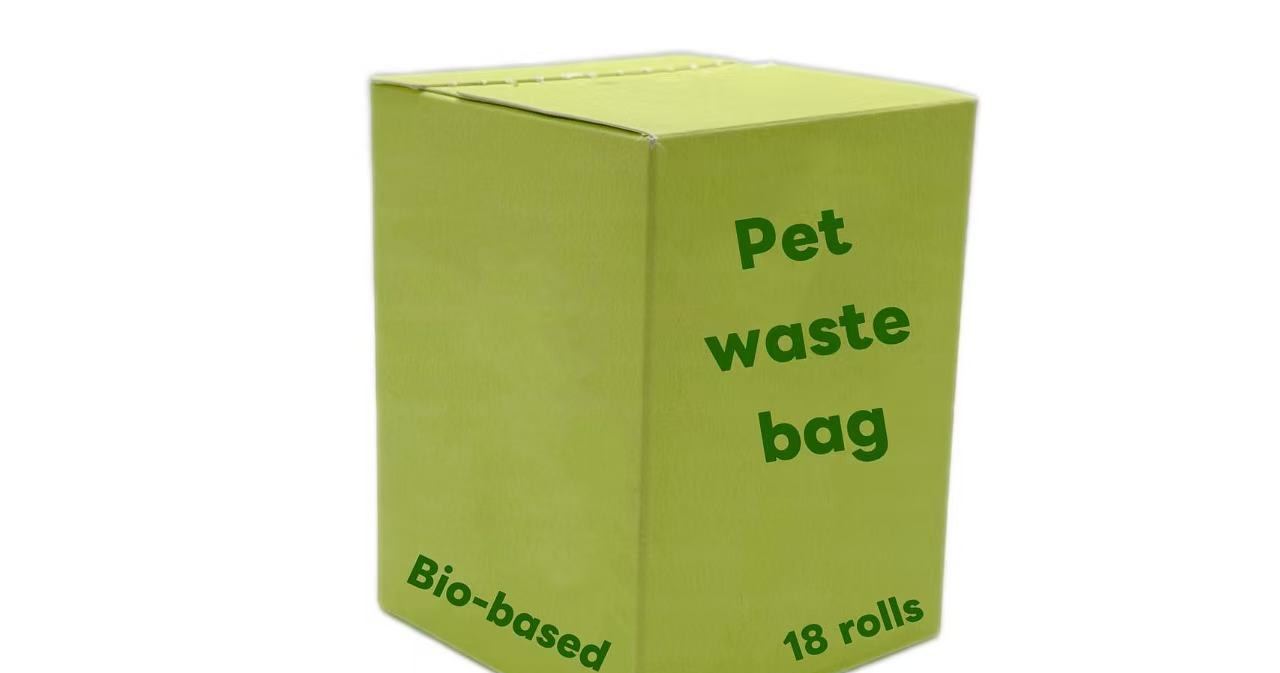
Compostable is the fastest-growing claim in the pet waste category — and the easiest one to get wrong. This guide is written for brand owners and procurement teams evaluating a compostable poop bag programme. It covers what the claim actually means, which certificates to demand, how to read a spec sheet, and the workflow from sample to shelf.
What "compostable" actually means
A compostable bag must pass a recognised standard, and almost all buyers mean the industrial standard: EN 13432 in Europe, ASTM D6400 in North America, AS 4736 in Australia. The pass criteria are strict — 90% biodegradation within 180 days, disintegration within 12 weeks, no ecotoxicity to plants (seed germination tests to OECD 207/208), and limits on heavy metals. A home-compostable claim (OK Compost HOME) is a different, rarer certification with a lower temperature regime. If a supplier cannot name the standard their film passed, the claim is marketing, not fact.
The certificate package to ask for
For any compostable programme, request four documents before the first order: (1) the EN 13432 or ASTM D6400 test report for the exact film grade — reports are grade-specific and cannot be transferred between suppliers; (2) a material declaration stating the PBAT and PLA share; (3) eco-toxicity data from the seed-sprouting test; (4) a declaration of compliance for your destination market, for example alignment with the EU PPWR or the US FTC Green Guides. A credible factory supplies these as a matter of course; a weak one quotes a certificate number and nothing else.
Reading the spec sheet
Three numbers do most of the work. Thickness: 8-12 microns suits light dispenser rolls, 15-20 microns carries a full pickup from a full-size dog, and anything above 20 microns is usually wasted money in a compostable film. Bag size: flat bags run 20x30 to 23x33 cm, vest bags 25x38 to 30x45 cm — too small and owners cannot tie the bag, too large and material cost jumps with no perceived value. Bag count: 15-60 per roll for dispensers, 50-150 per retail box for shelf. Ask for a pre-production sample at the exact gauge and size before approving tooling.
MOQ, lead time and sampling
Standard MOQ is 3,000-10,000 bags per SKU; first orders can often run 1,000-2,000 bags as a paid trial at a trial price. Lead time is 25-35 days from deposit and artwork sign-off — tooling and film blending 15-20 days, printing and bag making 7-10 days, QC and packing 3-5 days. Sampling is free for existing platforms and ships within 3 working days; custom-printed samples take 7-10 days after artwork confirmation. Book capacity 45 days ahead of pet-industry trade-show windows, which cluster in March-May and September-October.
Pitfalls that burn buyers
First, oxo-degradable is not compostable — an EPI additive fragments the bag but passes no composting standard, and EU retailers increasingly reject the claim outright. Second, "biodegradable plastic" claims are restricted in the EU and scrutinised under the FTC Green Guides in the US; if your pack says compostable, your market needs the matching certificate on file. Third, compostable film has a shorter shelf window than PE — buy in production quantities, not annual volumes, and store below 30°C away from direct sun. Fourth, never seal compostable bags inside conventional bin liners for disposal; the whole point of the material is the industrial composting stream.
Procurement checklist
Before you sign, confirm: the standard and test report for the exact film grade; the PBAT/PLA ratio and bio-content figure; gauge, size and bag count on a physical sample; MOQ and trial-order route; lead time including tooling; the certificate package for your market; and the factory's own quality and social credentials — ISO 9001 and SMETA are the baseline for any serious retail vendor. Ask for the factory audit report, not a promise of one.
Why this matters commercially
Retail buyers in Europe and North America now ask for the certificate package at the listing stage, not after the order. Brands that can produce EN 13432 paperwork on day one win the listing; brands that improvise lose the shelf and sometimes face delisting. The material decision is made once, at the start of the programme — which is exactly why it deserves this much scrutiny.
Continue reading
Need More Detail?
Our engineering team can provide full spec sheets, samples and factory audit documentation.